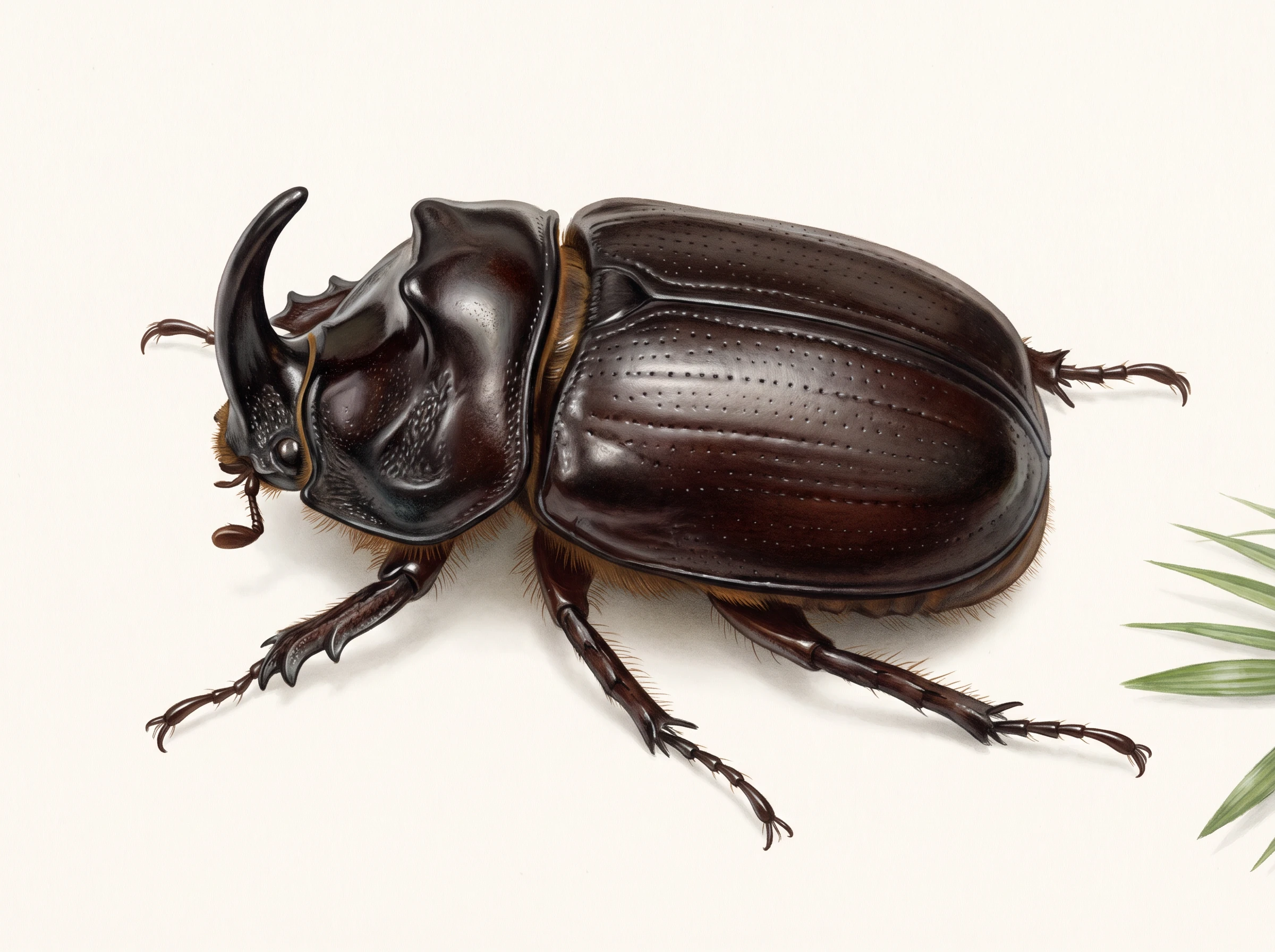
01 · Recognize the signs
Identify CRB & Palm Damage
Recognize adult beetles, understand larval look-alikes, and document suspected damage without overstating a diagnosis.

Learn to recognize coconut rhinoceros beetle, protect niu—coconut palms—and evaluate nonchemical management options.
Explore the CRB resource centerExplore little fire ant resourcesAloha from the communityAloha. We bring together community observations, Hawaiian knowledge shared with permission, and scientific research to support care for Hawaiʻi’s lands, food systems, and cultural relationships. Coconut rhinoceros beetle is our main focus, with dedicated resources for little fire ants. We focus on prevention and nonchemical approaches, explain what the evidence supports, and identify questions that still need investigation.
Get to know the councilRecognize adult beetles, understand larval look-alikes, and document suspected damage without overstating a diagnosis.
Plan for mulch, compost, dead wood, and material movement before they become a recurring CRB problem.
Read management claims with their source, setting, measured outcome, and limitations visible.
Recognition, prevention, and reporting resources for Hawaiʻi’s communities.
Care for place begins with relationships, responsibility, and permission.
Connect public strategies with practical community priorities.
Read the question, the method, and the limitations behind a result.
Dated, attributed CRB milestones and context for community observations. This page is not a live detection map.
A place for practical knowledge, honest observations, and careful evaluation.
Make a proposal, a trial, and a demonstrated result easy to tell apart.
Document a suspected sighting for our community team to review.