
Identify CRB & Palm Damage
Recognize adult beetles, understand larval look-alikes, and document suspected damage without overstating a diagnosis.
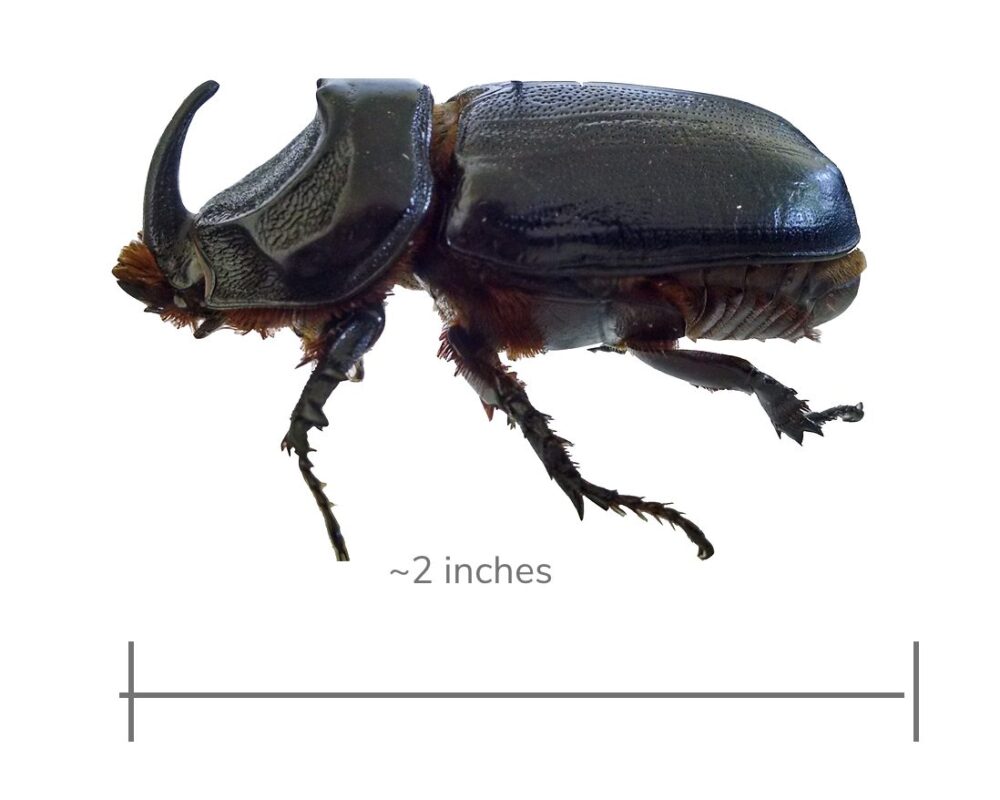
A useful report starts with a clear observation. Photograph the insect or damage, include a size reference when practical, and keep a suspected identification separate from a confirmed one.
Adult beetles and larvae
CRB Response describes adults as dark beetles, commonly about two inches long, with a conspicuous horn. They can fly and are active at night. Larvae are pale grubs that curl into a C shape and live in decaying plant material.
Other scarab larvae can look similar. The identification resource compares CRB with oriental flower beetles and other look-alikes. Use multiple features and request confirmation instead of identifying every large grub as CRB.
Damage to look for
Possible signs include V-shaped cuts in coconut fronds and boreholes near the crown. Fan palms may show scalloped edges or a pattern of holes. These signs support further inspection; a photograph alone may not establish the cause.
Visible frond damage can lag behind feeding. CRB Response cautions that damaged foliage does not establish whether an adult is still inside the palm, while a palm without obvious damage can still have feeding activity.
Make your photographs useful
The following is our proposed documentation checklist for community records. It is intended to make observations easier to review and compare.
- Take one view showing the whole palm and another showing the suspected damage.
- For an insect, capture a clear top and side view if this can be done without allowing it to escape.
- Add the date, island, general location, and where the insect was found.
- Keep the original images and describe any uncertainty in your notes.
- Keep private addresses out of publicly shared captions unless the landholder consents.
Connect observations to action
Use our on-site reporting form to share a suspected observation with the community team. A submission is not automatically an agency report or a professional identification. A record should say who confirmed the identification and when; until then, label it suspected.
Do not climb a palm to obtain a photograph. Ground-level documentation can begin the conversation with a qualified arborist or response specialist.
Sources & further reading
References support the topics discussed above. A link does not imply partnership or endorsement. Some external sources also discuss treatments outside this site’s nonchemical scope.
- CRB Response — Identification and look-alikes
Supports the appearance and damage descriptions; consult its reference photographs.
- CRB Response — Palm management
Supports the caution about delayed visible damage.