Coconut Rhinoceros Beetle
A community guide to protecting niu and other palms through prevention, physical management, careful observation, and shared responsibility.
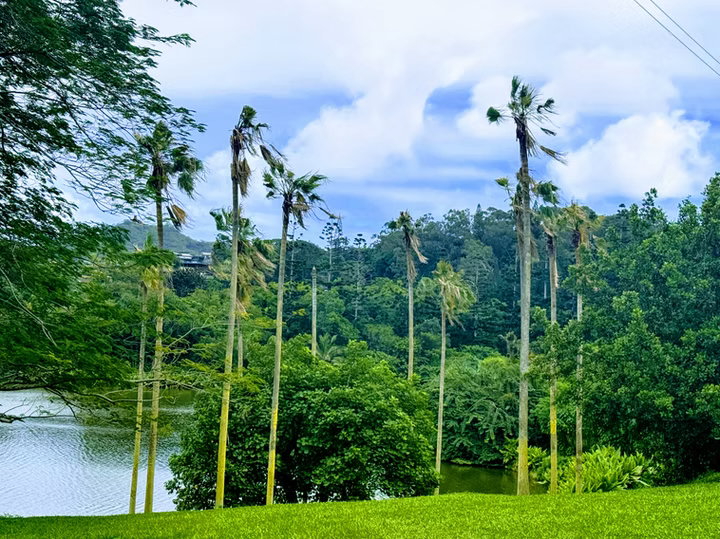
Protecting niu means caring for food, living cultural relationships, and the places our communities call home. This resource brings nonchemical CRB management and transparent evidence together, with practical starting points for households, growers, and neighborhood groups.
Understand the problem
Coconut rhinoceros beetle, Oryctes rhinoceros, was first detected on Oʻahu in December 2013. Adults damage developing palm tissue; larvae develop in decomposing organic material. Managing the breeding environment is therefore a different task from protecting a palm crown.
CRB Response describes management as a combination of approaches. Its guidance does not identify a single treatment that eliminates CRB from an area. Our emphasis is on prevention and physical methods, with the limits of each method made visible.
Choose your starting point
Use the linked guides below to work through identification, prevention, management, and follow-up. Record what you observe before making changes so that you can compare conditions later.
- Found an unfamiliar beetle or grub: start with identification and submit a community observation through our on-site reporting form.
- Receiving mulch or maintaining compost: review prevention before materials arrive or move.
- Caring for an accessible palm: review physical protection and maintenance requirements.
- Organizing neighbors: agree on observations, responsibilities, and a shared review date.
Niu and community stewardship
UH West Oʻahu’s Uluniu Project describes work that connects Indigenous practitioners and scholars around cultural revitalization, food production, and environmental conservation. That provides a useful example of community-led stewardship; it is not a CRB efficacy trial.
For this website, accounts of Hawaiian practice should name the practitioner, place, and permission to share. Cultural knowledge deserves its own context and attribution. A claim that a particular practice suppresses CRB also needs evidence appropriate to that claim.
What this guide commits to
We prioritize approaches that readers can understand, inspect, and evaluate. We distinguish published experiments, institutional guidance, and community observations. We welcome well-documented results, including unsuccessful attempts, because they help communities decide where to put their time and resources.
- No pesticide product recommendations.
- No promised cure or guaranteed eradication.
- Clear attribution, dated sources, and corrections when evidence changes.
Sources & further reading
References support the topics discussed above. A link does not imply partnership or endorsement. Some external sources also discuss treatments outside this site’s nonchemical scope.
- CRB Response — Identification and life history
Institutional guidance supporting the detection date and adult/larval distinction.
- CRB Response — Management overview
Supports the need to combine methods; linked for evidence, not endorsement of every treatment on the source page.
- University of Hawaiʻi — Uluniu Project
Published February 4, 2021. Cultural and food-system context, not proof of beetle control.